
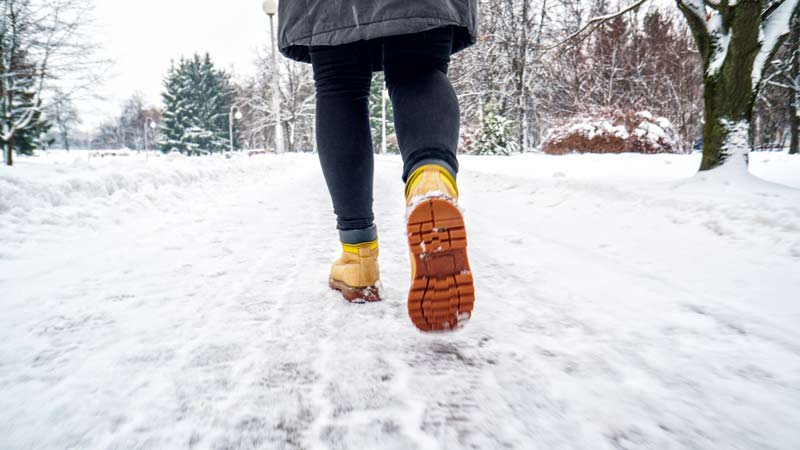
It’s winter in Minnesota and that means snow, ice and often an increased concern and risk for falling.
Falling is a common problem as people age. 1 in 3 adults over the age of 65 fall each year and that number increases to 1 in 2 adults over the age of 80. Approximately 3 million injuries related to falls are treated in emergency rooms each year with over 800,000 hospitalizations.
Falling is not an inevitable part of aging, however. By planning ahead and using a few strategies and resources, the risk for falls and subsequent injury and/or loss of independence can be avoided.
Tips for winter walking
Below are some tips for staying safe when walking on snow or ice.
- Plan ahead. Give yourself sufficient time and plan your route.
- Wear shoes or boots that provide traction on snow and ice. Avoid smooth plastic and leather soles. Footwear should have visible treads and a flat bottom. Consider adding a product such as Yaktrax that have an abrasive sole or cleats for added traction when walking on snow and ice—but remember to remove Yaktrax when entering buildings.
- Walk on designated walkways as much as possible. Avoid taking shortcuts over snowbanks.
- Use special care when entering or exiting vehicles or buildings, or when climbing up or downstairs. Move slowly, use guardrails when available, and shake off excess water or snow from shoes when entering buildings.
- Anticipate ice. Be aware of thin sheets of ice that may appear as wet pavement.
- Walk safely. To walk on ice, you need to shift your center of gravity over your front leg. Bend slightly forward and walk flat-footed. Keep your hands out of your pockets and take short steps or shuffle for stability. An animal that has figured this out is a penguin. So think: Walk like a penguin!
Fear of falling can be as bad as a fall
While the risk of slipping and falling exists for everyone, older individuals often have increased worries regarding their fall risk whether on ice, simply being out in the community, or in their own home.
Fear of falling is a recognized problem among older persons, including individuals who have never experienced a fall. Those with a fear of falling tend to restrict activities and social engagements. These restrictions can lead to problems with social isolation, depression, feelings of helplessness and physical decline.
In a study reported in the Journal of the American Geriatrics Society of 673 older adults who lived independently in the community, 60 percent reported moderate activity restriction due to fear of falling and 15 percent reported severe activity restriction. A moderate activity restriction was defined as restriction or avoidance of 1-2 activities that may lead to falls. A severe activity restriction was defined as restriction or avoidance of 3 or more activities.
Avoidance of physical activities due to a fear of falling can become a self-fulfilling prophecy. The lack of activity can lead to loss of physical skills and an increased risk of falls. It is important for older adults to address their concerns regarding falls, and to take measures to reduce the risk of falling other than simply avoiding activities.
Prevention strategies
These falls prevention strategies can be helpful, regardless of the season:
- Talk to your doctor. Fewer than half of those who fall tell their doctors. It is important to tell your doctor about any past falls you have sustained. Even if you haven’t had falls, your doctor can assess your fall risk and make suggestions about how you can reduce your risk.
- Have your doctor review your medications. Your doctor should know about both your prescription and over-the-counter medications. Certain medications can increase the risk of falling, such as those used for sleep or depression. Some medicines on their own or when combined with other medications can affect your balance or cause feelings of drowsiness, dizziness or give you the feeling of being light-headed. Changing the doses of some medications or adding new medications can also increase your risk of falling.
- Make your home safer. To avoid falling at home, get rid of things that might make you trip or slip. Remove clutter, small furniture, pet gear, electrical cords and loose rugs. Arrange or remove furniture so there is plenty of room for walking. Keep your home well-lit both inside and outside so you can easily see where you are going. Put railings on both sides of the stairs and make sure outdoor walkways are smooth and free of puddles/ice. Add grab bars inside and outside of your bathtub or shower and next to the toilet.
- Stay active. Exercising on a regular basis can help control your risk for falling. It might also prevent you from getting hurt if you do fall. Exercises that incorporate both strength and balance training have been shown to be the most effective in reducing the risk of falls.
- Find a community falls prevention program.
Juniper programs can help prevent falls
Juniper’s falls prevention programs can be a great opportunity to learn how to manage and reduce the fear of falling. You’ll learn more strategies for reducing fall risk and have an opportunity to participate in exercise programs that focus on falls prevention.
In the Juniper program, A Matter of Balance, participants learn different ways to think about falls and their concerns about falls, shifting from self-defeating to self-motivating thoughts. Although A Matter of Balance is not specifically an exercise class, participants spend some time learning about the importance of exercise in preventing falls, identifying barriers to exercise and learning which exercises are best for fall prevention.
A Matter of Balance participants learn to recognize fall hazards often present in the home or the community and strategies to reduce those hazards. Finally, participants learn how being assertive in expressing their needs can aid in fall prevention, and they practice assertiveness skills in locating and using resources for fall prevention and seeking help after a fall.
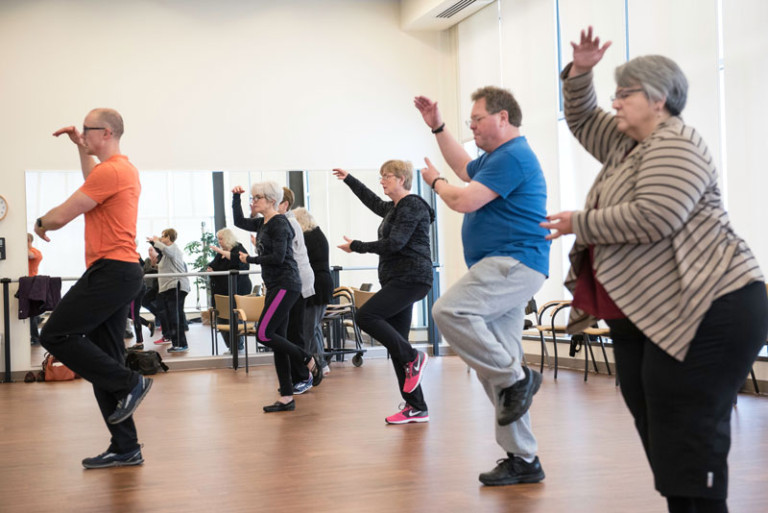 Juniper also offers the strength and balance training program, Tai Ji Quan: Moving for Better Balance. In comparison to A Matter of Balance, where the class is largely learning-based, Tai Ji Quan is an exercise-focused class that leads participants through a series of movements that are designed to challenge balance and teach how to correct one’s center of gravity after moving off-balance. A recent study of Tai Ji Quan: Moving for Better Balance found that falls were reduced by 31 percent in the group that participated in Tai Ji Quan over other forms of exercise.
Remaining active and safe as you age
Remember, falling is not an inevitable part of aging. You can remain active and stay safe as you age no matter the season. Understanding fall risks is the first step to staying safe. Juniper’s falls prevention programs are a great resource for both learning about and minimizing fall risks, as well as offering proven programs for strength and balance training.