
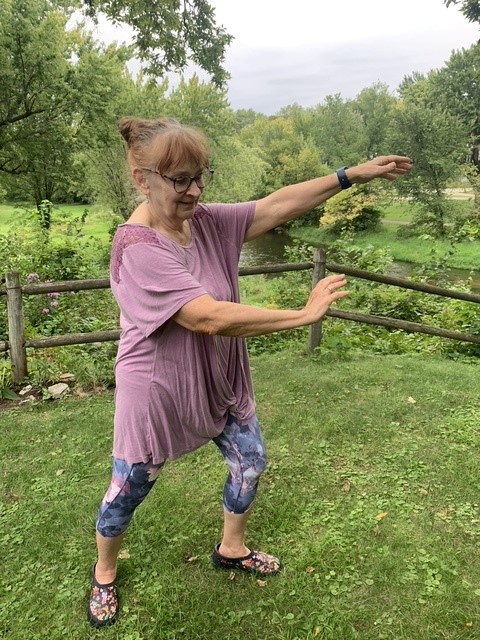
 A retired occupational therapist, Adrienne spent her career helping others build strength and preserve energy. But after a few falls and a busy stretch of home renovations, she realized it was time to focus on her own well-being.
“I didn’t want to go back to work. I wanted to take care of the old ‘bod,’” she says with a laugh. “Learning tai chi had always been on my bucket list, and when I saw Juniper offered a class geared toward seniors, I jumped in.”
Adrienne first heard about Juniper through a friend who had been taking the SAIL (Stay Active & Independent for Life) strength and balance class. After a year of consideration, she joined SAIL and was immediately hooked. “I could tell the class was based in science. I appreciated the use of medical terms. It’s respectful and educational.”
While still active in SAIL, Adrienne also enrolled in Juniper’s Tai Ji Quan: Moving for Better Balance beginner class. “Jessica is an incredible teacher. She takes it at our pace, clarifies things, and points out what we wouldn’t have noticed. She even shows us the ‘wrong’ way to do a movement so we can feel the difference. That’s so helpful.”
Now in the advanced Tai Ji Quan class, Adrienne finds herself practicing movements outside of class, like reaching for objects with flexed knees, distributing her weight and catching herself before a fall. “I’ve had a couple of pretty bad falls in the past. But in the year I’ve taken SAIL, I haven’t fallen once. There were a few times I caught myself, and I know it’s because of the muscle memory and habits I’ve built. I’ve gained strength, balance and confidence.” She’s also strengthened her muscles naturally to manage her osteoporosis without medication.
Beyond the physical benefits, Adrienne treasures the mental stimulation and community connection Juniper provides. “Jessica’s mirror-image teaching is great for the brain. Listening to verbal instructions while watching visual cues—it’s a mental exercise. That’s not something people talk about, but it matters.”
Adrienne attends all classes via Zoom and has even recruited friends and family to join, including her sister who’s now a regular. “I plan my appointments around Juniper classes. When I miss a day, I feel the difference.”
Her advice to anyone considering Juniper? “Take it! I can attest to the benefits. I’m living proof. It’s literally a life saver.” She hopes more physicians will learn about Juniper and recommend it to their patients.
Adrienne’s story is a testament to the power of movement, community and thoughtful instruction. With a little help from Juniper, Adrienne continues to thrive.
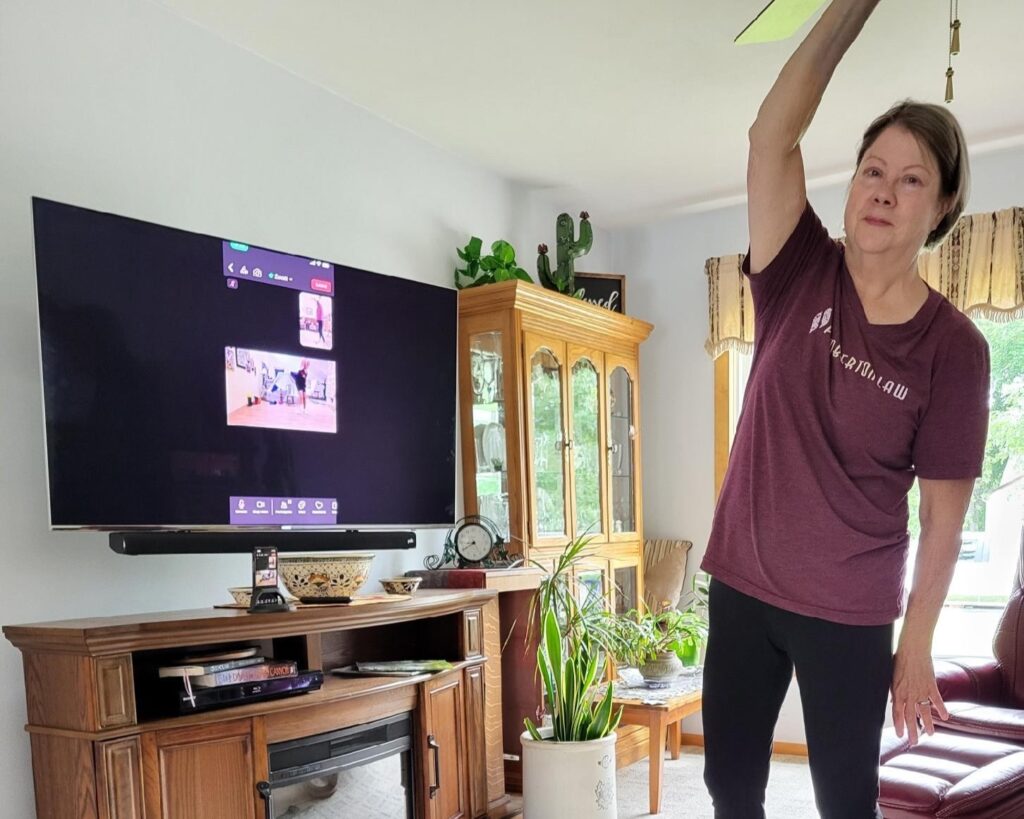
Karel Odegard just finished her last Juniper’s Stay Active and Independent for Life (SAIL) class for the summer and is ready to register for the next round. At age 70, she says she has increased her energy, flexibility, and strength, greatly reducing her chances of falling. “When I trip, lose my balance, and start falling, I catch myself,” Karel says confidently. “I’m very aware of where my feet are at all times, especially when walking up and down stairs.”
Juniper’s SAIL class is a strength, balance and fitness program for adults 65 and older. Performing exercises that improve strength and balance is the single most important activity adults can do to prevent falls. There are 24 SAIL classes over a period of eight weeks, and Karel noticed immediate improvement. “By the end of my first session, I could feel the difference in my strength and flexibility. No question. As the class went on, I realized that if I push myself, I make progress; if I don’t, I maintain my strength.
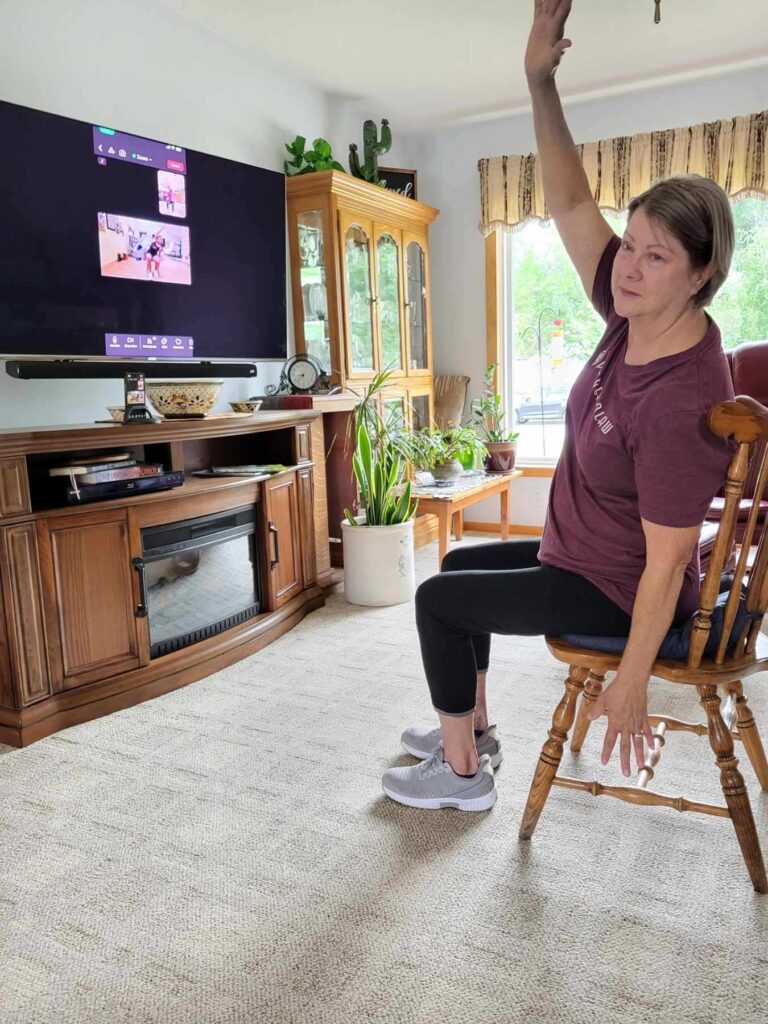 Incorporating active movement into her everyday life is another outcome of SAIL classes and a priority for Karel. She was just 38 years old when she was diagnosed with type 2 diabetes. “It was hard to fit exercise into my already crammed-full day when I was working full-time and raising kids,” she explains. “When I retired four years ago, I set a goal to prioritize exercise in my life so I could stay healthy and strong for myself and my grandchildren.” The goal led Karel to the Fergus Falls YMCA Foundation, where she learned about Juniper’s SAIL class and the opportunity to take it online.
“I barely brush my hair and head to the television to prepare for class!” With the help of her much-appreciated tech-savvy son-in-law, Karel simply logs on to class on her phone and casts (projects) it onto her television screen, making it easy to see SAIL instructor Yvonne Hanley. Now in her 3rd year of taking the class three days a week, Karel says she can’t live without it. “Between the class and walking two days a week, I’ve been able to keep my diabetes under control and keep my A1C under seven,” she says. “I feel strong, and I have the energy to care for my grandchildren and drive them to their activities. I’m pretty sure I also inspired their parents to exercise!”
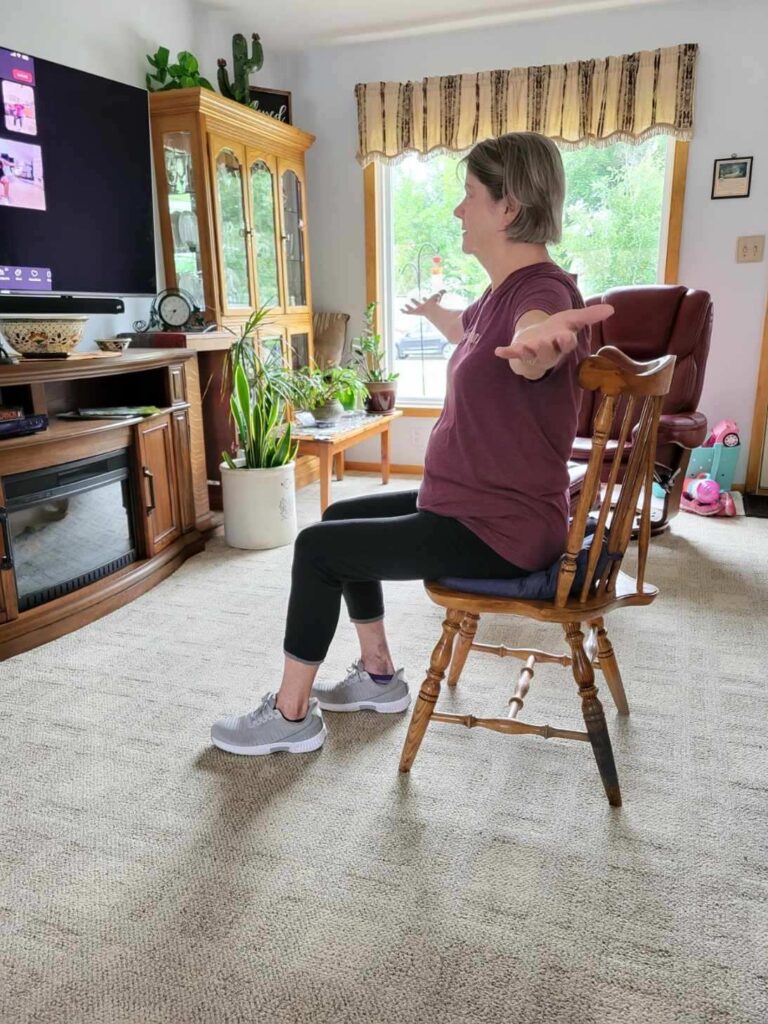 Karel is grateful for her SAIL class. “I’m not as afraid of falling because I feel confident that I can catch myself, and if I do fall, my muscles are strong, making it less likely that my bones will crack. I can see the toned muscles in my arms. I’ve never had that before.”
Karel feels comfortable in the online class and likes that people can be as social as they choose. “If you want to chat before and after class, you can; if you don’t, that’s okay, too. Some of us went out to an event together one night, and it was fun!”
Losing weight and staying active is keeping Karel’s diabetes in check. “I’m so grateful SAIL is there for me. It’s been a game-changer.”
To find a Juniper’s Stay Active and Independent for Life (SAIL) class and learn about other classes available through the Juniper network, go to the home page of yourjuniper.org and click on Find a Class.
 Twyla Barron was reaching for a ripe, red tomato in her raised vegetable garden when her foot caught on the edging, causing her to fall backwards and land flat on ground. Picking a tomato was by no means a new experience for Twyla but this time it was a turning point. “I realized that my entire body was weak from inactivity, and as a result, my shoulder took a jolt, and I mixed up my whole system.”
According to the CDC, every second of every day, an older adult (age 65+) suffers a fall in the United States. Unfortunately, Twyla was one of them. The good news is that she took some important steps to protect herself from falling again.
After physical therapy that helped a little and a water aerobics class that wasn’t enough, Twyla went in search of something more. Juniper’s Stay Active and Independent for Life (SAIL) class at ACE of Southwest Minnesota in Pipestone was her first stop. “I learned what’s important for people over 65 to know,” she says. “I learned about balance and how to use weights, and I was ready to take another step, leading me to Juniper’s A Matter of Balance class in the same location.”
After working in a sedentary clerical position for a school district for 30 years, Twyla admits that she needed to start moving again and focus on the challenges that often come with aging.
A Matter of Balance is an award-winning program designed for older adults to manage falls and increase activity levels, two things Twyla needed. In the class, she learned strategies to reduce her fear of falling and increase her level of activity. The goal is for participants to show improved balance, flexibility and strength—all things that Twyla wished she would have had in the garden while reaching for the tomato.
“My hands were weakening, and I started dropping things, so I knew I needed to keep my brain going,” Twyla says. She cites an exercise in her Matter of Balance class that helped with that. “We did a brain exercise of flipping one hand, while making a fist with the other. Then we switched hands, and did the same thing,” she says. “It’s really hard to concentrate, but it was helpful.” Twyla now knows to be more aware about what her hands and feet are doing and move with intention.
Other exercises in the class were also helpful. “We learned how to step over objects on the floor, and I’m now taking my instructor’s advice to look ahead into the distance when I walk instead of looking down. I realize that when I do that, I’m less likely to fall than if I’m looking down. It’s about being more aware of what can be dangerous.”
A Matter of Balance class was comfortable for Twyla, for a few reasons. “You won’t catch me dead in yoga pants,” she says with a chuckle while explaining why she prefers her class at ACE, over a gym filled with young, active people. “In my class, we dress like we do at home, and we learn and exercise next to people our own age.”
Twyla enjoyed her classmates too. “I liked the social side of the class,” she says. “While we’re doing repetitive exercise, we talk and laugh about how we’re doing, and we encourage each other. Sometimes our instructor played music to help motivate us, and that was fun too, along with having coffee after class.”
Instructor Jill Toering says Twyla and her classmates made good progress. “Participants started the class saying, ‘I don’t think I can do this, and I don’t think it will benefit me,’ but once they engaged in activities, it was evident they had more flexibility and strength. And they supported each other.”
With a commitment to implementing what she learned in her A Matter of Balance class, Twyla plans to keep moving, and practicing her moves. “I need to do it to stay strong,” she says with conviction. “And doing that makes me feel better about myself.”
Juniper’s A Matter of Balance class offers practical strategies for reducing your fear and risk of falling, while helping you building body strength. Learn how you can benefit from A Matter of Balance.
 In the fall of 2023, Suzie Rock tripped on the threshold of her Minneapolis apartment and fell with an arm full of groceries. The door automatically shut and hit Suzie on her left side and hip, causing bruising and pain that lasted a week. “I went to the doctor because it hurt to breathe,” Suzie says. “A slight trip can change a lot.” And it certainly did for Suzie.
According to the CDC, more than one out of four older adults fall each year. With a heightened sense of awareness of the effect that aging is having on her movement, Suzie realized it was necessary to increase her strength, focus on balance and do whatever she could to prevent falling again. “When you’re young, you don’t have to think about these things because your brain and body are strong,” she explains. “Now, I realize I need to focus on what I’m doing and be very intentional with my walking.”
Juniper’s A Matter of Balance class is helping Suzie move beyond a knee replacement, build muscle and have more confidence in her strides. “My doctor said I needed to strengthen my muscles, so I looked for a way to do it. I saw a note about A Matter of Balance on the bulletin board at the senior center and decided to register,” Suzie says. “I don’t drive, so I was grateful that the class was being offered in my apartment building.”
The organization that made it possible for Suzie to take Juniper’s A Matter of Balance class without leaving her building is Normandale Center for Healing & Wholeness. The center has taught the award-winning evidence-based program for more than a decade throughout the southwest metro. As part of a new partnership in 2024, they are expanding outreach by working with the Minneapolis Public Housing Authority. The partnership supports underserved BIPOC (Black, Indigenous, People of Color) seniors by offering fall prevention education within these communities.
After just a few weeks, Suzie is feeling her leg muscles stretching from the exercises done in class. “Some exercises are done from a seated position, like chair yoga, and some standing up. When we stand up, we use chairs for balance, and we dance with our chairs,” she says. “I feel more confident walking now, and I’m more aware of where my feet are. If I had the leg strength I have now when I fell, I wouldn’t have fallen.”
Suzie was also happy to make some new friends in the class. “I met three ladies, and they all live in my building, so we see each other in the hallways and get together to visit.” Based on her experience, Suzie encourages others to take the A Matter of Balance class. “It’s important to be aware of your walking. The class taught me that my body, muscles and brain need to work together. We can no longer trust our bodies when we get older, so we need to pay more attention to what they’re doing, and if we do, our bodies will naturally tell us how to avoid tripping.”
Juniper’s A Matter of Balance class offers practical strategies for reducing your fear and risk of falling, while helping you build body strength. Learn how you can benefit from A Matter of Balance.
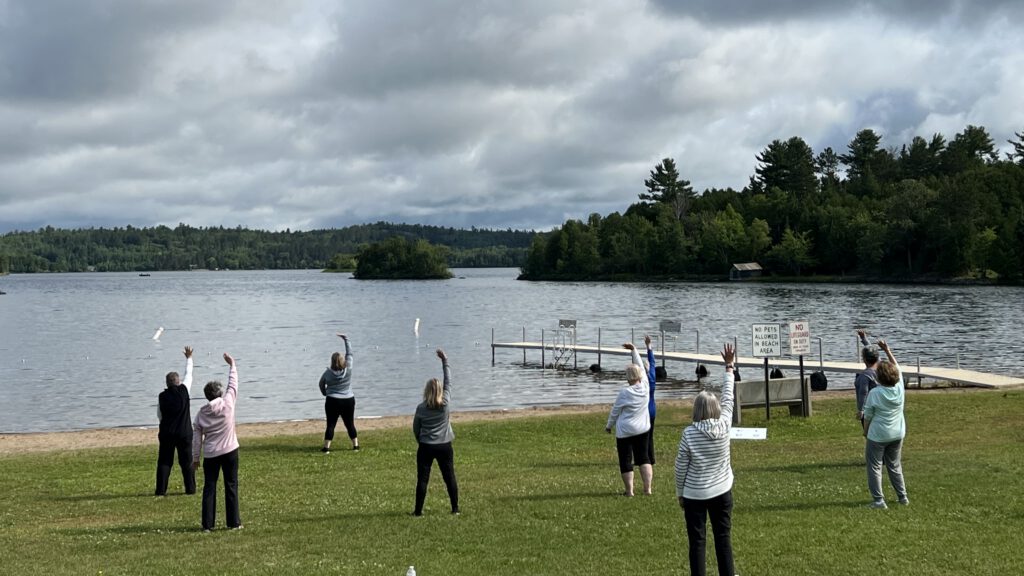
When Chris walked into the office at Northwoods Partners in Ely, MN, she was timid, shy and hiding behind a mask. “With no family and friends in the Ely area, I had become isolated, and had lost my self-esteem,” Chris recalls. I was a shell of myself, and at one point I was admitted to the hospital. That’s where I found out about Juniper’s Tai Ji Quan class at Northwoods.” Chris had done yoga in the past and saw Tai Ji Quan as a comfortable way to get out of the house and go learn something new. “It felt safe to me.”
“When Chris came to us, we were two weeks into our Tai Ji Quan: Moving for Better Balance class,” says Candy Schindele, programs manager at Northwoods Partners. “But when she asked to join it, I knew she had to start right away.”
Candy arranged a ride for Chris to and from class, so she didn’t have to worry about getting there. It was the first of many acts of kindness that Chris would experience at Northwoods Partners. “I couldn’t believe someone cared enough to pick me up for class,” Chris says.
“It gets me out of the house on Tuesdays and Thursdays, and I get fresh air because the classes are outside by the lake when it’s nice out.”
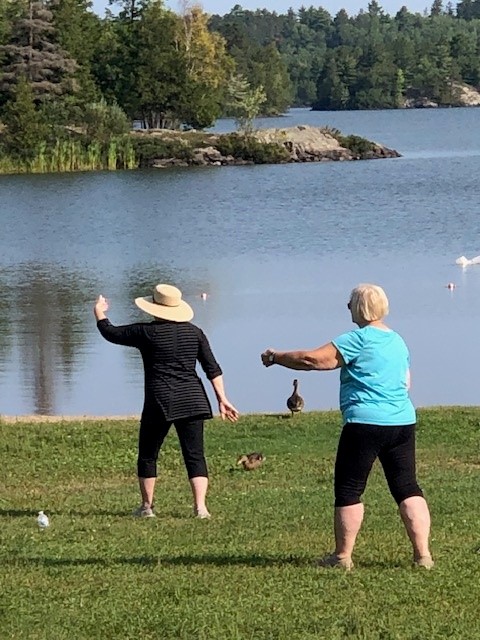 Chris says Tai Ji Quan has helped strengthen her body and her mind. It has drawn her out of isolation and into a group of supportive people. And with Candy as her instructor, Chris is at ease. “I’ve strengthened my leg muscles, and my balance has increased,” Chris explains. “I no longer see myself as a falls risk, and I’m losing weight from the exercises. And because of the breathing exercises, I’m no longer short of breath.”
Some of the people in Chris’ Tai Ji class are stroke survivors, and she points out that they do the exercises in a seated position. “It’s a non-judgmental environment,” she says. “The idea is to move your body and use your mind. All of this supports your emotions, including going to your happy place while you’re breathing, something Candy encourages us to do.”
After two rounds of Tai Ji Quan beginner classes, Chris is considering moving to an advanced class. She has gained the strength she needs to tackle the house projects that have been on her agenda for a long time. “I’m painting,” she says with a lift in her voice. “I never would have had the stamina to do this before. I’m also getting back to sewing and doing yoga.” The best thing about Chris’ Tai Ji Quan class is that she now has a support system of people who care about her.
“Chris has blossomed,” Candy says with enthusiasm. “She is a highly educated, brilliant and strong woman with thoughts, opinions and stories to share. The Chris I met six months ago would never have done anything like this. She was worried if people in the class would like her, and now the group of like-minded people she’s found have become caring friends.”
“I had to miss a couple of classes due to health concerns, and my classmates were worried because I wasn’t there. Some of them called me,” Chris says in amazement. “I have friends now, and we’re going out to dinner and to the farmer’s market. We’re also going to presentations that are teaching me more about the town I live in. It’s more socializing than I’ve done in 20 years.”
Candy is grateful for the transformation. “Chris is an amazing woman, and the Tai Ji Quan program connected her with friends, including me. She has transformed her life and is improving the lives of older adults through volunteer work.”
Candy proudly reports that Chris plans to train as a registered Tai Ji Quan instructor, with a desire to help seated participants get the full benefit of the class. “She will continue to move forward with confidence, doing things she’s never done before.” Chris agrees, and says with a chuckle, “It takes a village to raise children, but it takes a state to take care of older adults, and I’m in the right state.”
Learn more about how you can benefit from Tai Ji Quan: Moving for Better Balance here.

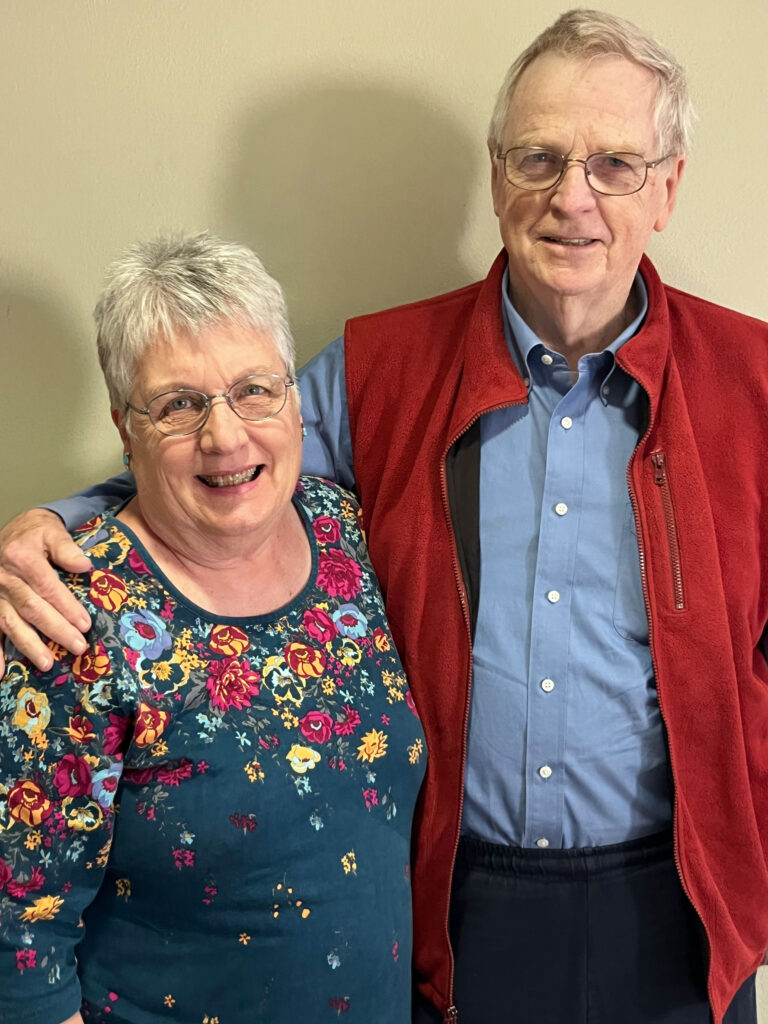
Teresa Anderson is a retired pediatrician and medical school professor who suddenly found herself doing caregiving of another kind when her husband experienced a series of unexpected medical issues. In less than a year, Robert went to the emergency room multiple times, was diagnosed with a TIA (transient ischemic attack), experienced delirium (a lack of awareness of his surroundings), brief memory loss and Parkinson’s disease-like symptoms (a reversible side effect from medication). He also sustained an injury to his hip, neck and shoulder, and lost many activities of daily living, including the ability to dress himself.
After 46 years of marriage, life changed overnight and it continued to change, as Teresa advocated for a diagnosis, knowing it was possible Robert’s health issues could be a result of his exposure to Agent Orange while serving as a naval officer during the Vietnam War. Teresa cared for Robert and assumed chores, errands and other responsibilities. “We used to love grocery shopping together and going to Costco, and Robert did most of the cooking,” Teresa explains. “Suddenly, I was doing it all, while also being his caregiver. I was overwhelmed, and my brilliant husband felt terrible that he was unable to help or do things for himself.” Fortunately, help was on the way.
 Scrolling through Facebook one day, Teresa found Juniper’s Powerful Tools for Caregivers class in her feed. The timing of the post was so spot on that she checked with friends to see if they had sent it to her. They hadn’t. “How cool is that?” she says. “I had never heard of Juniper, and it appeared at a time when I was looking for support.”
Teresa enrolled in a virtual class without hesitation. “I liked that it’s an evidence-based class, and it was perfect because I didn’t have to worry about leaving Robert to go to class.” Teresa reports that the class helped her make a paradigm shift to focusing on self-care. “I realize that caregivers neglect themselves, but without caring for yourself, you can’t care for the person you love. The class and the support of others within it helped me realize that I can’t go 120 miles per hour for the rest of my life.”
Teresa found support in her Powerful Tools for Caregivers class
Teresa names several benefits of the Powerful Tools for Caregivers class. She mentions the workbook and the checklists that fit her style, but she is quick to draw attention to the action plan. “The plan required me to come up with one thing I would commit to doing for myself that week, like taking a walk,” she explains. “Then I had to write down when I was going to do it, and how often. Writing the plan was very beneficial to me because there’s something about putting things in writing that makes it more official.”
One week later when class reconvened, no one had achieved their goal, opening the door to a group discussion about barriers. According to Teresa, this is when the magic happened. “People shared their plans if they were comfortable doing so, and we talked about why we didn’t accomplish what was on our checklist,” she says. “Hearing how people processed the list was very helpful to me and helped me decide what would work for me. It was amazing doing the plan because it focused on a small bite and helped me focus on something important.”
Learning to deal with negative thoughts was also helpful to Teresa. “First of all, you should give yourself credit for what you’re doing. Several of my classmates have friends and family telling them they’re not doing enough. In the class, we learned skills to combat the negative, including writing down our self-defeating thoughts and replacing them with positive thoughts. I also liked the guided muscle relaxation exercises.”
Teresa doesn’t deny that the class is a lot of work, but she believes it’s worth it. “You’re working on yourself with the support of your classmates and facilitators. I learned skills, and I was also reminded that I’m not alone. As a caregiver, it’s so important to have support. This class and the other caregivers within it were encouraging to me.”
The value of caring for yourself
 Speaking candidly, Teresa says it’s hard being a caregiver. “Navigating the system is difficult for me, and I have a medical background, so it must be very difficult for people who don’t have the knowledge and support I have,” she says. “I encourage other caregivers to write down their questions for medical appointments, attend them with their loved ones and don’t be afraid to ask for clarification.” She adds, “Be gentle with yourself. It’s okay to eat canned soup, and it’s okay if the bathroom isn’t as clean as it used to be.”
With a positive attitude, physical therapy and a sense of humor, Robert has greatly improved over the past few months. His most recent MRI showed areas of narrowing of the spinal canal, though no surgery is needed at this time. Teresa knows there may be rough days ahead, but it doesn’t feel as daunting because she knows she has the tools she needs to care for Robert and for herself. The medical professor in Teresa will continue to teach herself what works for her while drawing from the teachings of her Juniper class. “I no longer try to do it all,” Teresa says. “I’m advocating for Robert, and I also have to advocate for myself.”
Juniper Classes Change Lives
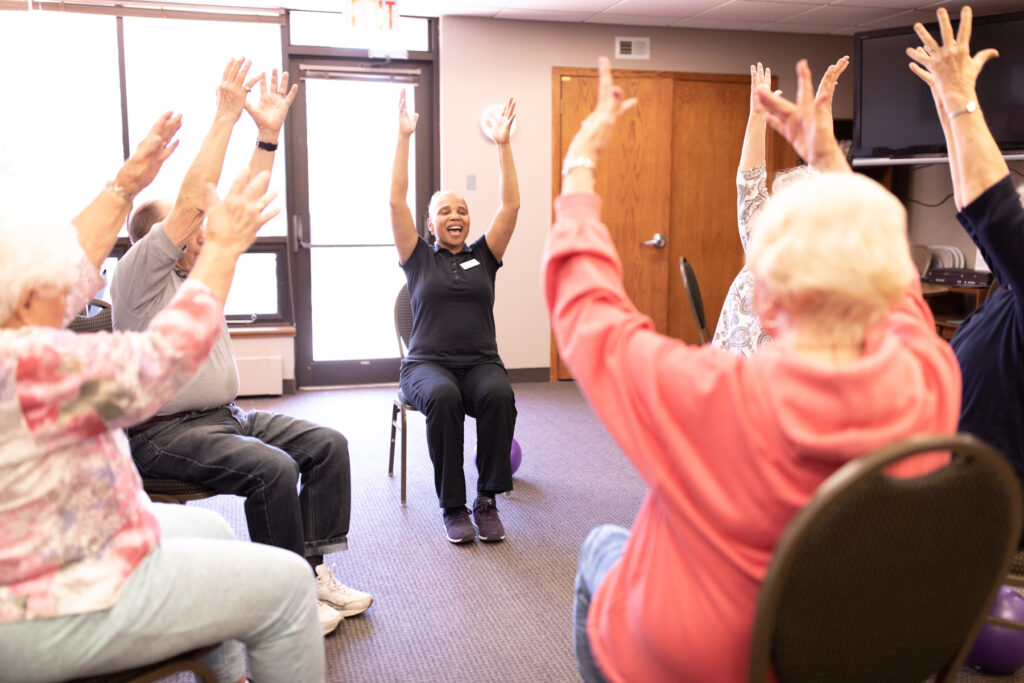
A Juniper class called Living Well with Diabetes was Kathleen’s first step into her Juniper series, followed by 12 virtual classes, including A Matter of Balance, Stay Active and Independent for Life (SAIL) and Tai Ji Quan: Moving for Better Balance.
Working hard and learning practical strategies for building strength and reducing the risk of falling have made it easier for Kathleen to step up on curbs and navigate snowy conditions. It’s also led to improvements in her leg and arm strength. “Before I took Juniper classes, I fell several times walking my dog, but now she doesn’t pull on her leash as much because my arms are stronger,” Kathleen explains. “And learning to position my feet wider apart and bending at the knees has helped me recover from vertigo moments.”
Gail Johnson is Kathleen’s Juniper class instructor and the health and wellness manager at CommonBond Communities. Gail says she’s had the honor of working with Kathleen in Juniper classes to improve her balance. “Kathleen’s balance was severely impacted by her injury. Just walking outdoors was difficult, navigating and trying not to fall, but that’s no longer the case because she’s learned how to shift her weight and use other movements to prevent herself from falling.” Kathleen added, “I learned muscle memory in SAIL and Tai Ji Quan classes. Gail said it would become instinctive, and she was right.”
Another victory for Kathleen is being able to unload the dishwasher without thinking about it. Before Juniper classes, she would unload dishes from the dishwasher onto the counter and categorize them based on where they go in the cupboards. This made it possible for her to make fewer movements. “Now I can take them out, turn around, and put them away without thinking about it because I’ve regained a level of balance.”
Taking Juniper classes remotely from home has been extremely important to Kathleen. She says, “I don’t have to worry about commuting or looking good for class, and I like the privacy of learning steps and doing the motions without people watching because I can be clumsy and uncoordinated.” She adds, “But it’s good for people to have access to in-person classes as well to be able to choose what works for them.”
Enjoying Life to its Fullest
Helping Kathleen recover from her injury is extremely gratifying for Gail. “I want people to be successful,” she says. “I always think there are people missing out on Juniper classes, and I would like to see more men attend. In my experience, once men come to a class and realize we’re not doing dancing aerobics, they’re hooked!” Gail shares the story of an 80-year-old class participant who can still get down on the floor to play with his grandchildren. “He is sure he wouldn’t be able to keep doing it without Juniper’s classes,” she says. “The classes allow people to enjoy the highest quality of life possible, and it’s never too late to get started.” Gail also says we need to be mindful about putting a daily routine aside due to life changes.
“There are other routines to enjoy, and we need to keep moving.” Kathleen agrees. “I encourage people to give it a try, even if you think you may not be able to do it,” she says. I never thought practicing Tai Ji Quan would be possible for me, and now I’m taking the advanced class online, and I’m making new friends along the way.”
If you would like to find out how you can benefit from Living Well With Diabetes, Tai Ji Quan: Moving for Better Balance, A Matter of Balance or Stay Active and Independent for Life (SAIL) classes, go to the Juniper website and click on Find Classes.
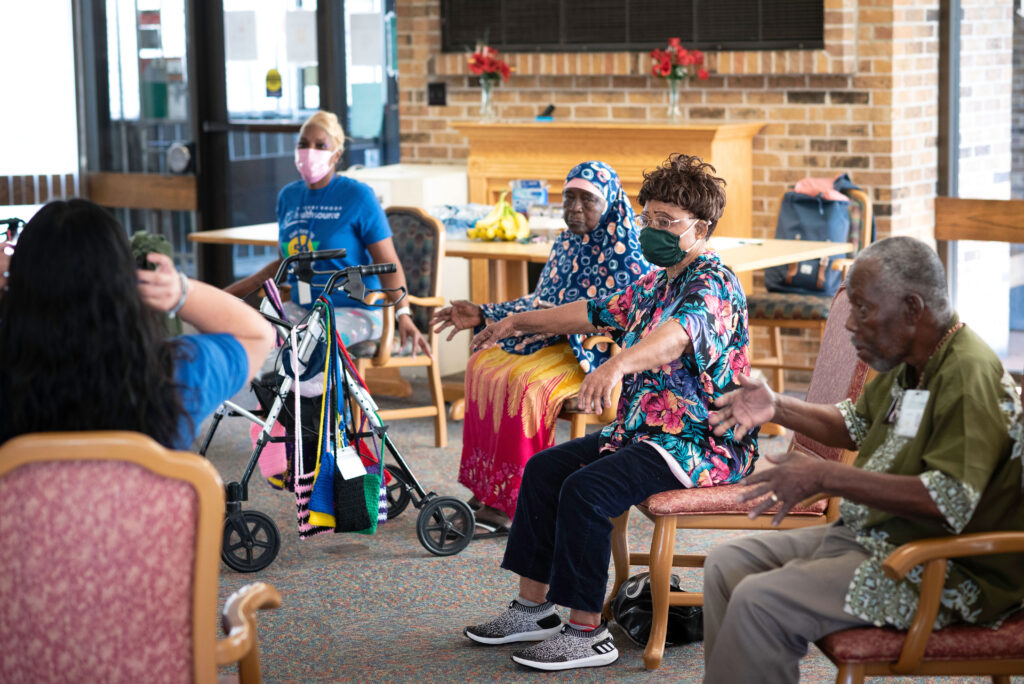
He met Xue Yang, a community health worker and class instructor setting up for the Juniper class, Tai Ji Quan: Moving for Better Balance. “What’s going on here?” Ronald asked. Xue’s answer led Ron to make Tai Ji Quan part of his road to good health.
Changing his lifestyle
After several years of watching television and eating poorly, Ronald had made a firm decision to get back in shape. He joined a health club, started pedaling on a stationary bike and lifting weights. Now after adding Tai Ji Quan: Moving for Better Balance to his exercise regimen, he says he feels stronger. “When I started learning the forms, it wasn’t difficult, but then I realized I was working muscles I hadn’t worked for a long time. The next morning, I felt better and stronger, so I know I need to feel the burn.”
Ronald says he has made a commitment to take Tai Ji Quan seriously to get the full benefit. “I’ve been familiar with martial arts since I was young, knowing it’s good conditioning for the body and the mind. In class, we lean forward and backwards, and learn how to maintain balance. If I were taking this class three to four times a week, I’d be a bad boy in a good way.”
At age 66, Ronald is working to stay fit. “I see a lot of people in my building use walkers, and I want to avoid that.” One thing Ronald is no longer avoiding, though, is his music. He credits his Tai Ji Quan class in part for bringing him back to his guitar after a 25-year break. He explains, “I’m now playing and singing in church. Albert Einstein said everything is relevant and because I feel better, I think more clearly and have a better attitude, so my music is better. I think I’m going to be as good on the guitar as I used to be.”
Playing his music
For Ronald, playing the guitar takes discipline and so does exercise. “The average person doesn’t have the discipline to get out of bed and exercise on their own. For me, it’s motivating to exercise with other people. I make myself get up at 7 a.m. and go to the gym, so I can get to my Tai Ji Quan class at 10 a.m.”
Walking also continues to be a priority for Ronald, and he feels more confident doing it now. “I walk better, and feel connected to my movements, so I’m not afraid of falling,” he says with confidence. “Little by little, I can tell the difference. I have more strength and energy now. I look at the little bitty things in my body where there is improvement and they continue to improve, little by little. I’m going to stick with Tai Ji Quan because with my exercise bike and lifting weights, it’s a win-win.”
“The key is to keep moving”
Ronald offers this advice for older adults who may be unsure about taking a Tai Ji Quan class. “Don’t think you can’t get in shape and function better in life. You can. Get up and stretch, walk and take a Tai Ji Quan class. The key is to keep moving, because if you don’t, you’ll shorten your life.”
If you would like to find out how you can benefit from Tai Ji Quan: Moving for Better Balance, go to the Juniper website and click on Find Classes.
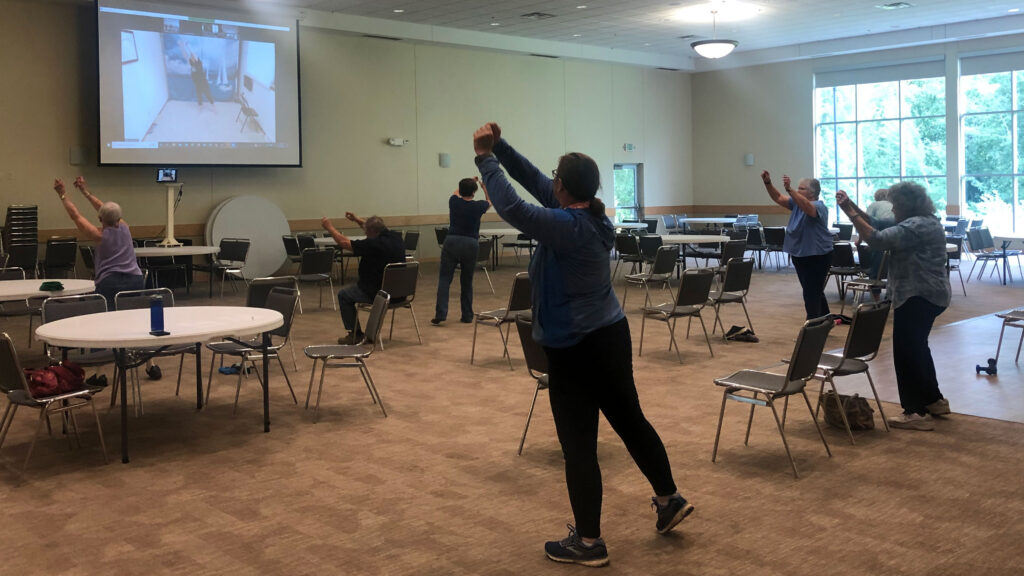
Stay Active and Independent for Life (SAIL) classes are now presented virtually at the Braham Event Center on Mondays, Wednesdays and Fridays inside the event center. “Instead of logging on to Zoom individually from their homes, participants prefer the companionship that comes from gathering together in a community space,” explains Kelly. “We log into Zoom, and the instructor appears on a big screen. It’s wonderful to be able to offer free classes and as a result, participants are saying they feel more fit.”
Stay Active and Independent for Life (SAIL) is a strength, balance and fitness program for adults 65 and older. The class is designed to reduce a participant’s risk of falling, with exercises that improve strength, balance and fitness. These exercises can be done seated or standing.
Braham classes are taught by Alisa Tomette, PhD., a public health educator and trained SAIL instructor. Fondly known as Dr. T., Alisa has made it easy for people to get involved, Kelly noted. “She provided posters promoting the class that we hung up in the event center and around town. She also got our local newspaper to print information on the class. Then she provided registration forms, so people could get signed up.”
Darlene Kratt, a SAIL participant, registered for the class because she was starting to get arthritis in her knees and was feeling tightness in her back. “It’s a nice way to stretch,” she says. “It was the right amount of exercise when I started the class and now I’m working my way up, with small increases each time.”
Participants start from either a stated or standing position. Every participant is different. For example, one class member is rebuilding strength after surgery, and another wants to maintain her strength so she can continue to go out dancing. Physical abilities and ages vary among class participants (the oldest is 92), but everyone can socialize, and that’s another reason they show up for class.
Darlene will be 70 years old in a few months and knows it’s important to work on balance as she ages. “SAIL is good for someone my age. I like the low-impact cardio and I can tell that it’s working because I feel a good soreness in my muscles.” She also enjoys the social aspect of the class. “It’s nice to be with people my age from the local area,” she says. “And when I saw that this class is connected to Juniper, as a former aging care specialist, I knew it would be good.”
Kelly Nelson says Juniper classes contribute to the synergy of the Braham Event Center, and now, Tai Ji Quan: Moving for Better Balance classes have been added to the schedule. “I’m so happy we found Juniper. Our experience has been really great!”
If you would like to find out how you can benefit from Tai Ji Quan: Moving for Better Balance or Stay Active and Independent for Life (SAIL) classes, go to the Juniper website and click on Find Classes.
 Managing the pain
Determined to heal and stop the pain, Kris did her best to follow her physical therapist’s directions but was frustrated with going from exercises and machines that were strengthening her para-spinal muscles to what she simply defines as stretches. “The exercises were pretty lame, and I had quite a bit of back pain most of the time,” she admits. “Honestly, pulling weeds in the garden did more for me.”
Then in the fall of 2021, Kris found Juniper. “One of my knitting friends told me about Juniper classes and suggested I try the Tai Ji Quan: Moving for Better Balance Zoom class. It helped a lot. Then I took the Stay Active and Independent for Life (SAIL) class, and between the two classes, I am now pain-free most of the time!”
Performing exercises that improve strength, balance and fitness is the single most important activity adults can do to stay active and reduce their chances of falling. Tai Ji Quan: Moving for Better Balance is an evidence-based falls prevention program that is known to help older adults improve balance, prevent falls and retain independence. Stay Active and Independent for Life (SAIL) is a strength, balance and fitness program for adults 65 and older.
Kris feels Tai Ji Quan is good for her back because it’s slow-moving with a focus on balance and stretching. She says, “Shifting my feet and stepping to prevent falls works my accessory muscles and my core.” And for Kris, SAIL is like going to the gym because there’s an aerobic component along with flexibility, muscle strengthening and buidling balance. “SAIL clearly helped me strengthen my core muscles because when I went into my annual physical, my doctor said, ‘Wow, you have strong abdominal muscles!’ No one has ever told me that.”
Using what she’s learned
Shifting her feet and maintaining balance recently came in handy for Kris when she visited a Minnesota state park. She describes the experience. “I tripped on a root and as I started to fall forward, trying to catch myself, my other foot landed on yet another root which threw me off in a different direction. It happened again on a third root, and then amazingly, my Tai Ji Quan kicked in, and I caught myself. Thanks to my Tai Ji Quan training, I didn’t fall.”
Kris says she will continue taking Tai Ji Quan and SAIL classes. She is grateful to Juniper for the classes themselves and because they are offered via Zoom. “I gave up my gym membership because of COVID and the long drive,” she explains. “It is such a blessing for people like me not to have to get up and get out of the house, yet still get the exercise and the social connection. If my tripping incident had happened a year or two ago, I’m sure I would’ve gone down after the first root and broken something because of my osteoporosis. Juniper classes totally saved me!”
Learn about Tai Ji Quan: Moving for Better Balance or Stay Active and Independent for Life.